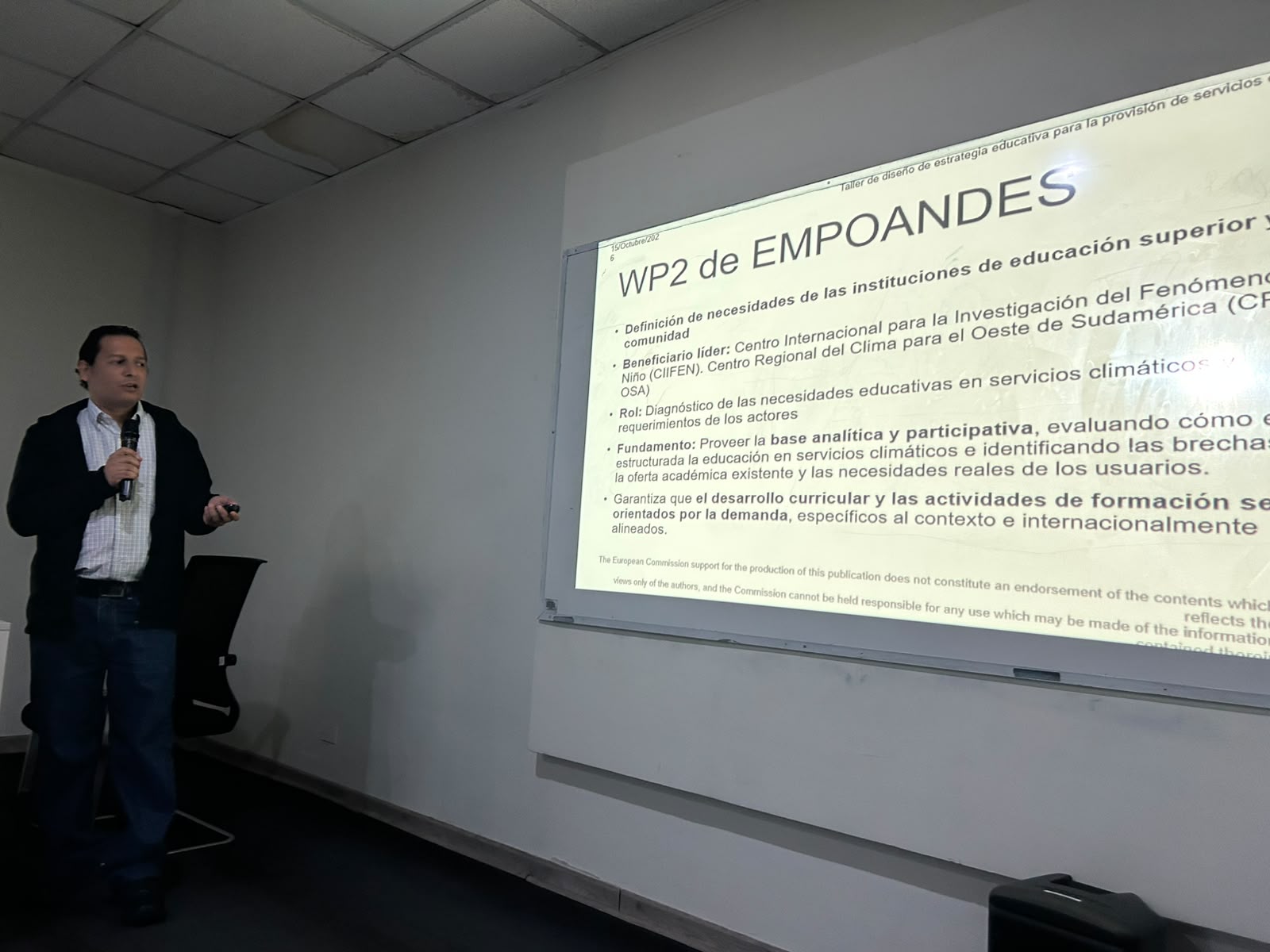
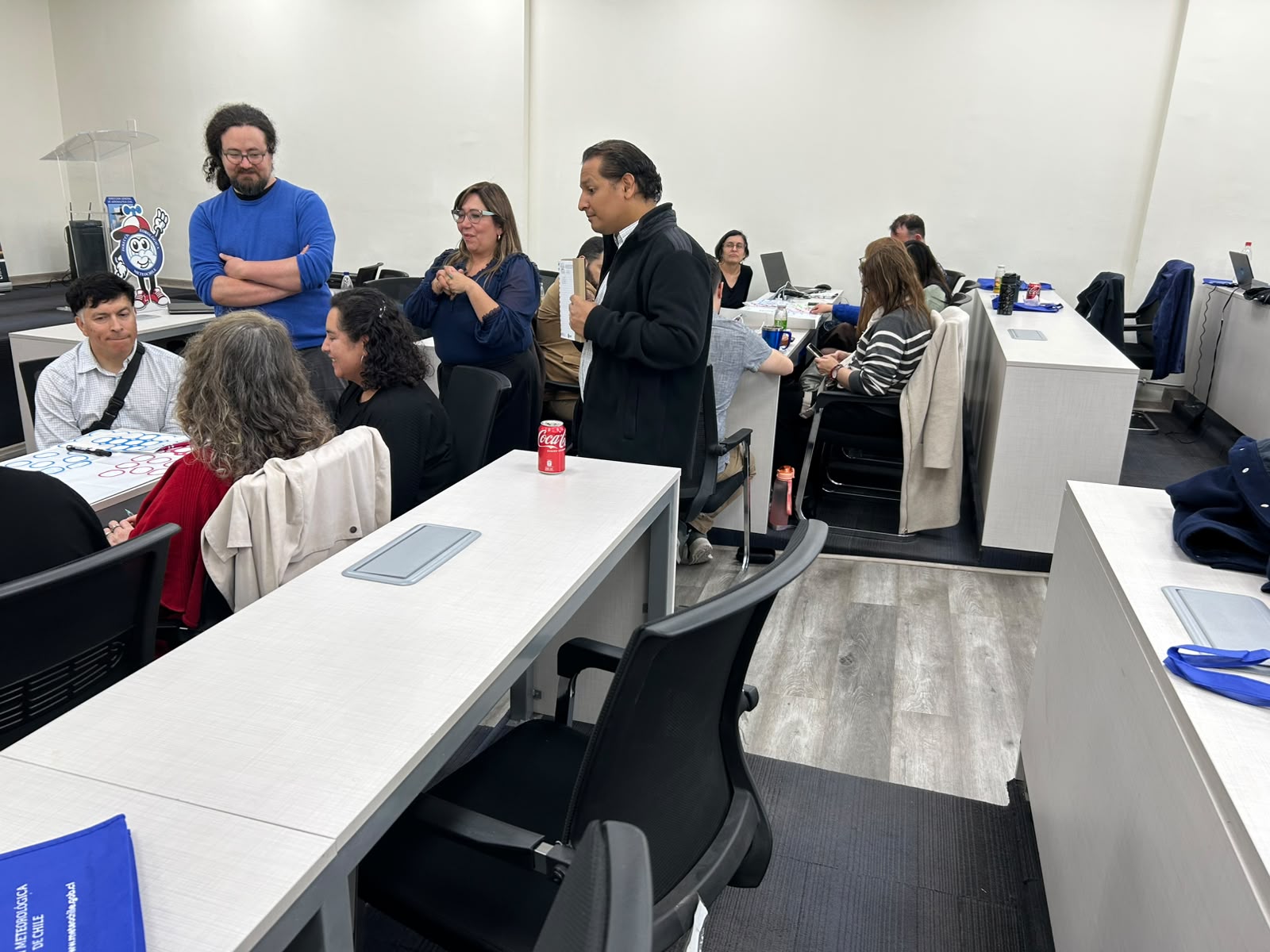
On Thursday, October 15, 2026, Santiago de Chile hosted the National Co-design Workshop within the framework of the EMPOANDES project. Marking the final stop of the national co-design workshop cycle across the Andean region—following the editions held in Colombia, Ecuador, and Peru—the event achieved exceptional engagement, gathering nearly 50 participants representing national agencies, operational meteorologists, researchers, academics, decision-makers, and key stakeholders from climate-sensitive sectors.
The workshop was co-organised by the Dirección Meteorológica de Chile (DMC) and the Universidad de Concepción (UdeC), working in close collaboration with the International Research Center on El Niño (CIIFEN) as WP2 lead and the Universitat Rovira i Virgili (URV) as project coordinator.
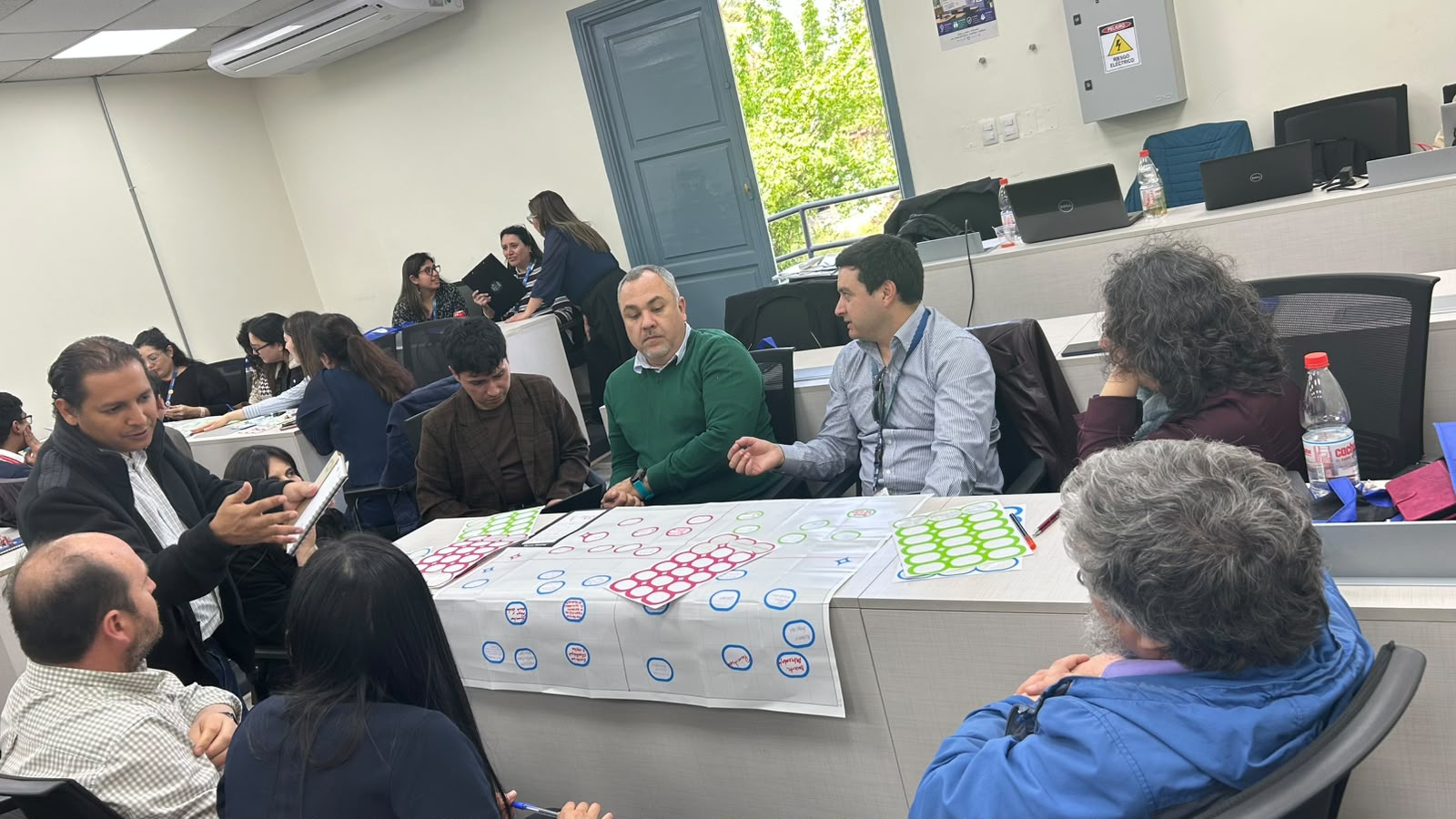
Throughout the intense sessions, participants examined the findings of the national diagnostic survey on educational capacities in climate services. Working in interactive groups, attendees identified priority training needs and competency gaps in the production, translation, and user-tailored delivery of climate information, strictly aligned with the World Meteorological Organization (WMO) competency framework.
A cornerstone of the day was the participatory debate on curricular design and professional capacity building, bridging the gap between operational operational meteorology, university programmes, and sectoral requirements (water management, agriculture, forestry, and disaster risk reduction). The workshop also consolidated an essential multi-institutional network to support Chile's National Framework for Climate Services and foster a sustained community of practice.
With the completion of this workshop in Chile, the EMPOANDES project successfully concludes its round of national co-design workshops across the four partner Andean countries. The valuable outcomes and roadmaps established will directly guide the development of university curricula (WP3) and professional training courses (WP4). The EMPOANDES consortium expresses its gratitude to DMC, Universidad de Concepción, and all participants for their active dedication.