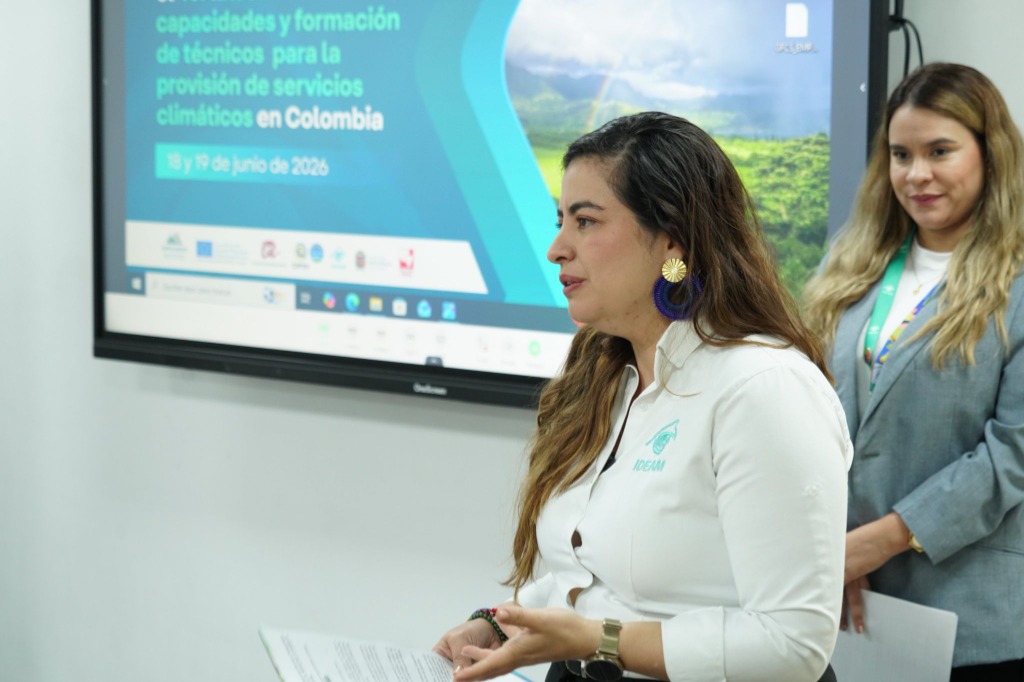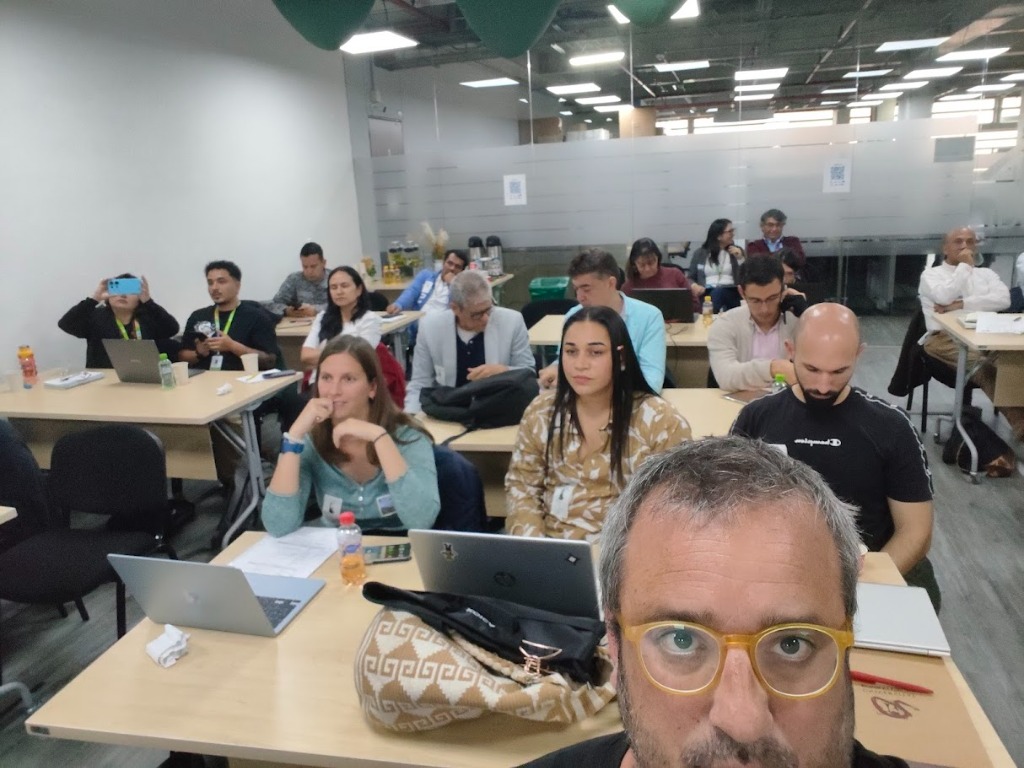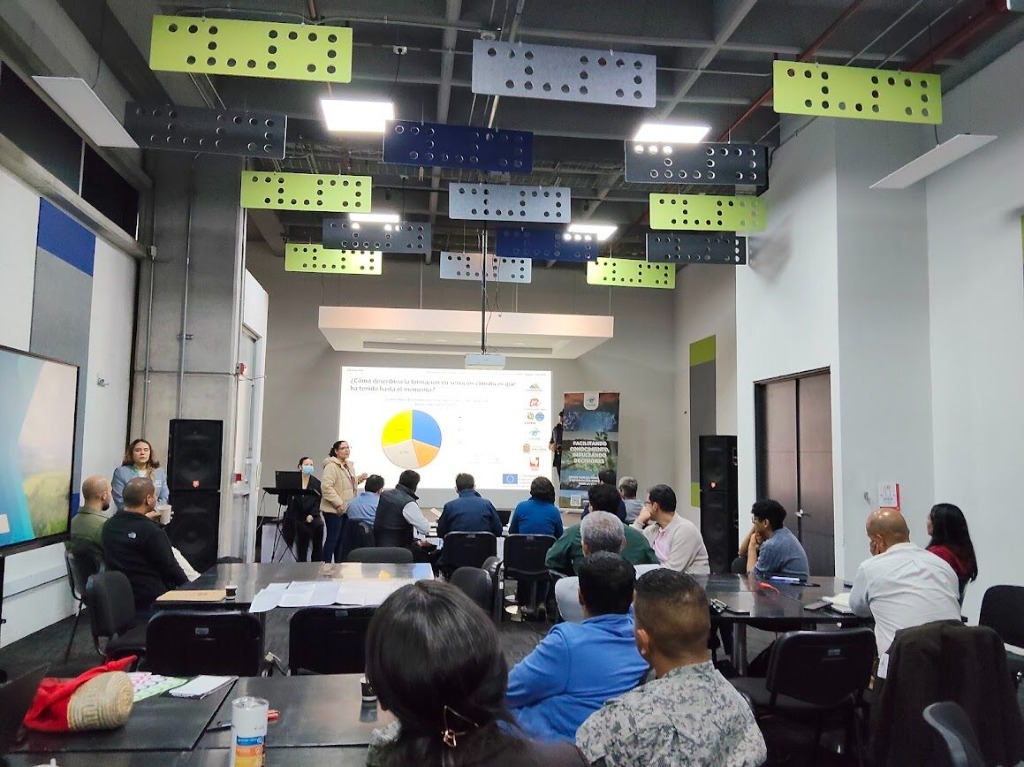
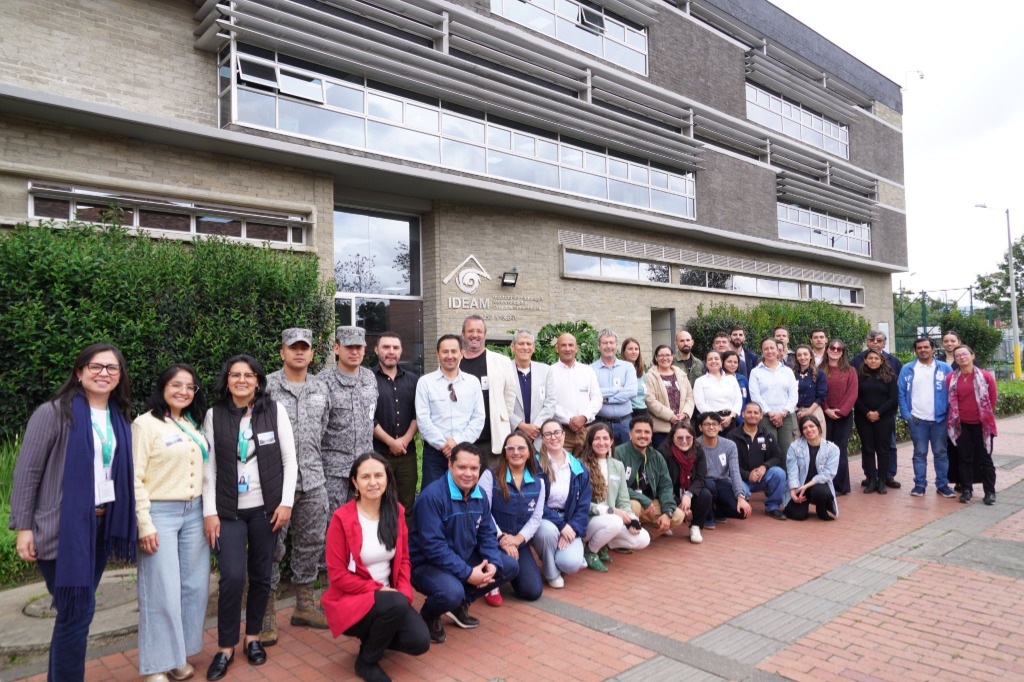
Following two intensive days of collaborative work in Bogota (June 18-19, 2026), the first national workshop for the co-definition of the educational and training strategy in climate services, developed under the EMPOANDES project framework, has been successfully completed. Hosted at the headquarters of the Institute of Hydrology, Meteorology and Environmental Studies (IDEAM), this participatory event brought together around thirty participants, including climate service providers, decision-makers, and end users from the public sector, academia, and civil society.
The EMPOANDES project, co-funded by the European Union's Erasmus+ program, aims to enhance climate resilience in the Andean region against extreme events like floods, droughts, and heatwaves through the co-creation of education and technical training capacities. Aligned with the guidelines of the Global Framework for Climate Services (GFCS) and the World Meteorological Organization (WMO), this workshop laid the foundations for designing future academic courses at undergraduate, master's, and PhD levels, as well as professional development pathways. The strategy focuses on five key WMO competencies: data management, climate products, forecasting and modeling, quality assurance, and communication, applying them to critical climate-dependent sectors such as agriculture, water, health, energy, and disaster risk reduction.
The starting point for the sessions was the national diagnostic report on the educational situation of climate services in Colombia. This report was compiled using stakeholder mappings and comprehensive surveys targeting both technical staff and information users. The workshop provided a collaborative space to evaluate and enrich these preliminary findings, cross-referencing quantitative data with the lived experience of local professionals.
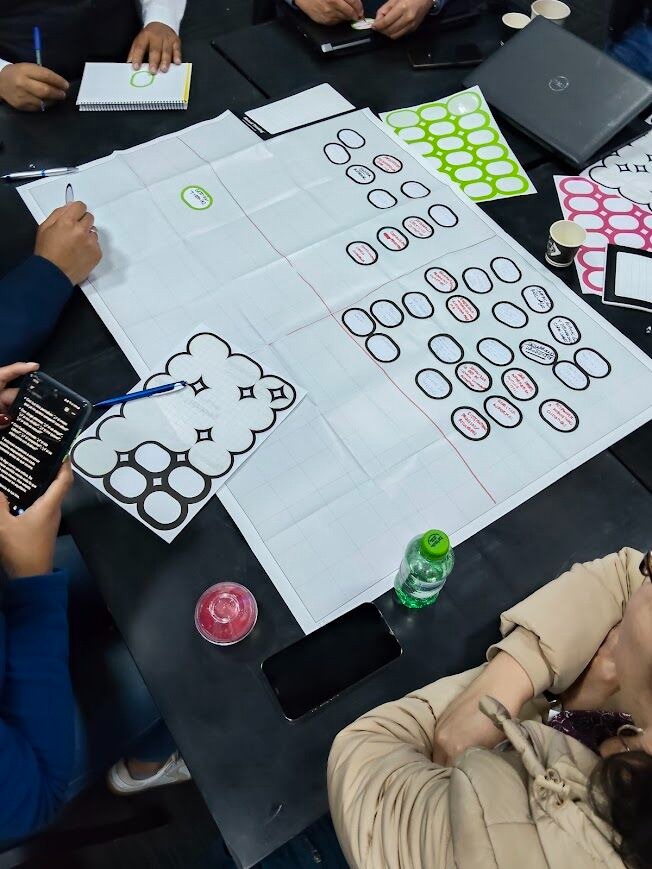
On the first day, following presentations on the progress of Colombia's National Framework for Climate Services by IDEAM, participants engaged in interactive group discussions to assess the gap between current academic offerings and operational needs. The second day focused on co-designing the educational strategy proposal and prioritizing a roadmap with short-, medium-, and long-term targets. Through active group dynamics, stakeholders debated key questions regarding training formats, topics, and the creation of a continuous learning community to ensure the project's long-term sustainability.
We would like to extend our special thanks to our local partner, IDEAM Colombia, for their warm hospitality, with particular gratitude to Director Ghisliane Echeverry for her opening address, as well as the involved subdirectories. We also acknowledge the active participation of our Colombian partners, the Universidad Nacional de Colombia and Universidad del Valle, in both the pre-workshop and the workshop sessions. Special recognition goes to CIIFEN and the exceptional leadership of Pier Luiggi Maquilón Lipari, Leader of WP2, in coordinating this package, as well as all other consortium partners present (Yachay Tech University, Central University of Ecuador, National Agrarian University La Molina) and the Colombian stakeholders who made these two days of reflection and co-creation possible. The journey continues, and the consortium is already gearing up for the next national workshop, which will take place in Ecuador in a few weeks.