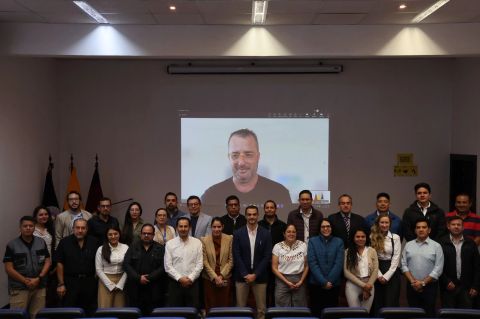
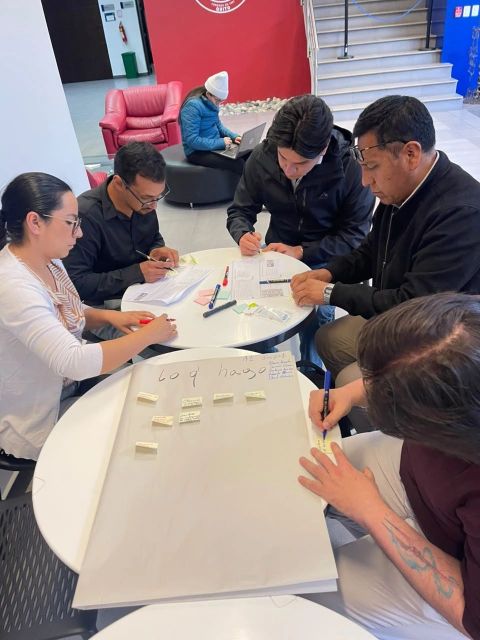
On 15 and 16 July 2026, the Central University of Ecuador (UCE) in Quito hosted a national co-design workshop as part of EMPOANDES, a project funded by the Erasmus+ Programme. The event brought together more than 30 representatives from institutions involved in providing climate services, public authorities, cooperation organisations, academia, and climate-sensitive sectors.
The main objective was to advance the development of a national educational strategy to strengthen capacities and support the training of technical staff in Ecuador. Building on the diagnosis of the educational situation related to climate service generation, led by CIIFEN, participants validated the main findings and jointly identified:
- Priority training needs
- Knowledge and skills gaps
- Capacity-building priorities
- Opportunities to reinforce institutional cooperation
As a result, participants made significant progress towards defining an educational strategy adapted to the national context and laid the foundations for a climate services learning community that promotes collaboration, knowledge exchange, and the continuous strengthening of technical capacities.
This process represents an important step towards reinforcing climate services in Ecuador and the institutional capacities required to respond to the challenges posed by climate variability and climate change.
Following the fruitful workshops in Colombia and Ecuador, the EMPOANDES consortium is already actively exploring and coordinating the next national workshop in Peru.